SenzAgro transforms polytunnels by combining smart irrigation, precision farming and automated farm monitoring into one connected system. IoT sensors track temperature, humidity and soil moisture, automated pumps, valves and foggers respond to crop needs, and cameras and a digital platform give farmers real-time alerts and analytics. This helps reduce water use and labour while improving crop consistency.
Polytunnels protect crops from unpredictable weather, but protection alone doesn’t make farming efficient or sustainable. The next step is smart automation. By combining IoT sensors, smart irrigation, precision farming, automated monitoring and crop analytics, SenzAgro turns polytunnels into intelligent production environments. Farmers can use resources more efficiently and respond to crop needs in real time.
So, how can smart technology transform a conventional polytunnel into a smarter, more efficient and sustainable farming system?
1. Smart Irrigation: Making Every Drop Count
Water management is one of the most important challenges in modern agriculture. Conventional irrigation often depends on fixed schedules or manual decisions, which can result in over-irrigation, under-irrigation and unnecessary water consumption.
A smart irrigation system for farming changes this approach by using technology and real-time information to support more accurate irrigation decisions.
Within a SenzAgro-enabled polytunnel, irrigation can be integrated with automated pumps, valves, drip irrigation infrastructure and digital scheduling. Where appropriate, soil and environmental sensors can provide additional information about growing conditions and crop water requirements.
Instead of asking, “When should I irrigate?”, farmers can move towards a more useful question:
“Does the crop need water right now?”
This shift is at the heart of water-smart agriculture.
Smart irrigation can help farmers:
Reduce unnecessary water use and improve irrigation consistency
Minimize over-irrigation and water wastage
Maintain more stable growing conditions
Monitor irrigation activities remotely and reduce manual irrigation
For farmers operating in regions where water availability is becoming increasingly important, integrating irrigation automation with digital monitoring can be an important step towards sustainable agriculture and technology-driven farming.
2. Precision Farming: Creating the Right Growing Environment
Every crop has an optimal range of environmental conditions for healthy growth. Temperature, relative humidity, soil moisture, soil conditions, ventilation and other microclimate factors can influence crop growth, productivity and quality.
This is where precision farming and sustainable agriculture come together.
Instead of treating the entire polytunnel as a single environment, smart technology allows farmers to collect information about what is actually happening inside the growing area.
IoT-based sensors can continuously monitor important parameters such as:
Temperature
Relative humidity
Soil moisture
Other relevant environmental conditions.
This information can help farmers identify changes in the growing environment before they become significant problems. Depending on the level of automation, smart systems can also support the operation of equipment such as ventilation systems, fans, foggers, misters, pumps and other devices. To see how this works in real vegetable and vanilla cultivation, read how SenzAgro smart automation solutions are transforming protected agriculture.
The objective is not simply to automate everything. The objective is to provide the right intervention at the right time.

Figure 01: A graph of historical micro-climatic data analysis within the cultivation area
3. Smart Farm Monitoring: Seeing the Crop 24/7
One of the biggest limitations of conventional farming is that farmers cannot physically observe their crops every minute of every day. A crop may experience heat stress, excessive humidity, irrigation problems or early signs of pest and disease pressure between farm visits.
A smart farm monitoring system helps close this information gap.
Through IoT sensors, connected devices and camera-based technologies, farmers can obtain a more continuous view of what is happening inside the polytunnel.
3.1 Crop Monitoring Using IoT
Crop monitoring using IoT allows information from sensors and connected devices to be collected and made available through a digital platform. Instead of relying only on occasional physical inspections, farmers can monitor changes in environmental conditions over time.
Camera-based monitoring can provide another layer of visibility. Continuous crop imagery can help farmers observe crop development and identify potential changes that may require attention.
This can support a crop health monitoring system using IoT, particularly when environmental information and visual crop information are considered together. The result is a move from reactive farming towards more proactive crop management.
For example, instead of discovering a problem only after visible crop damage has occurred, farmers can potentially receive an earlier indication that environmental conditions are moving outside the desired range.
4. From Data to Decisions: Smart Farm Software and Crop Analytics
Sensors alone do not make a farm smart.
The real value of smart agriculture comes from converting data into information that farmers can understand and use. This is where smart farm software, digital dashboards and an agricultural platform for farmers become important.
A modern digital farming platform can bring different sources of information together in one place, including:
Irrigation information, soil and environmental sensor readings
Temperature and humidity trends
Crop monitoring and crop performance information
Farm activities and historical records
Alerts and notifications
Instead of looking at individual pieces of information separately, farmers can develop a more complete understanding of their farming operation.
4.1 The Role of Crop Analytics
Crop analytics can help farmers identify patterns and trends that may not be obvious from a single observation. For example, historical data can help farmers understand how environmental conditions, irrigation activities and crop performance are related. Over time, this creates an opportunity for farmers to move from simply recording what happened to understanding:
5. Sustainable and Profitable Polytunnel Farming: The Future of Smart Agritech
The ultimate purpose of smart automation is not technology for technology’s sake. It is about creating a farming system that can produce better outcomes while using resources more efficiently.
The combination of smart irrigation, precision farming, IoT monitoring, automation and crop analytics can contribute to both environmental and economic sustainability.
5.1 Potential benefits include:
Reduced water consumption, Improved resource efficiency, Reduced labour requirements, Improved crop monitoring, Earlier problem identification, Improved production consistency, Better decision-making.
Together, these advantages demonstrate how smart agritech can contribute to the future of protected agriculture.
6. From Smart Polytunnels to Smart Farming Ecosystems
The future of polytunnel farming is not simply about installing a sensor, automating an irrigation pump or putting a camera inside a greenhouse. The real transformation happens when these technologies work together.
Imagine a polytunnel where:
Sensors monitor the environment → the system identifies changing conditions → irrigation responds to crop requirements → cameras monitor crop development → the platform analyzes the information → farmers receive meaningful alerts → decisions are made using real-time and historical data.
This creates a connected farming ecosystem where infrastructure, irrigation, IoT devices, software and crop intelligence work together. That is the direction in which SenzAgro is helping move protected agriculture.
Rather than viewing irrigation, monitoring, automation and crop management as separate technologies, an integrated approach can connect them into a single smart farming ecosystem.

Figure 02: A Dashboard view of SenzAgro Platform, which follows the IoT based crop identification platform.
7. The Future of Sustainable Agriculture Is Data-Driven
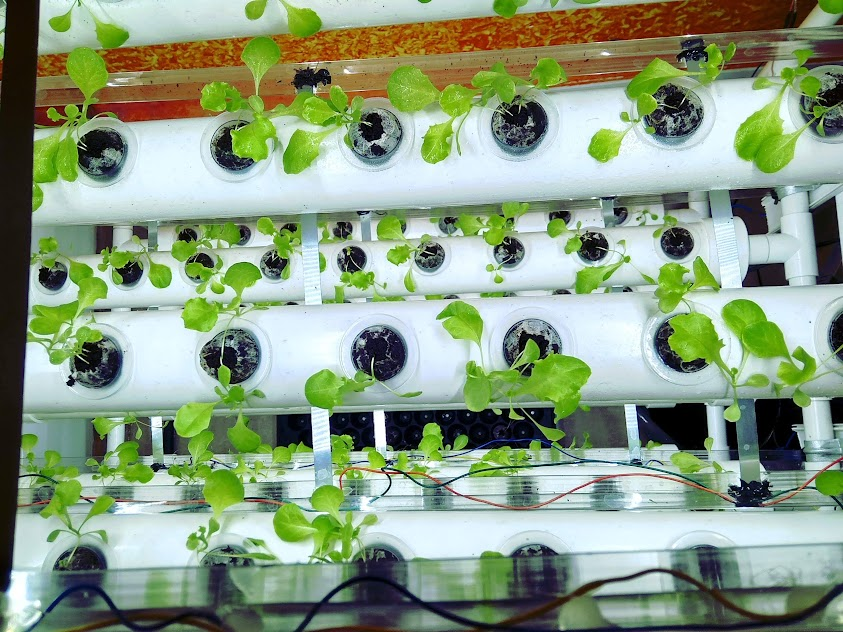
Data-driven decisions are shaping other controlled-environment approaches too. Vertical farming, with its sustainable practices and smarter decisions, shows how technology can help farmers produce more while using land and water more efficiently.
7.1 SenzAgro: Connecting Technology with Smarter Agriculture
SenzAgro’s approach to smart protected agriculture is built around connecting the physical farm environment with digital intelligence.
From irrigation and environmental monitoring to automation, crop monitoring and farm data, smart technologies can work together to help farmers improve efficiency, optimize resources and build more sustainable production systems.
The future of polytunnel farming is not simply about growing under protection. It is about growing smarter.